
5 Ways Open Access Publishing Can Combat Misinformation
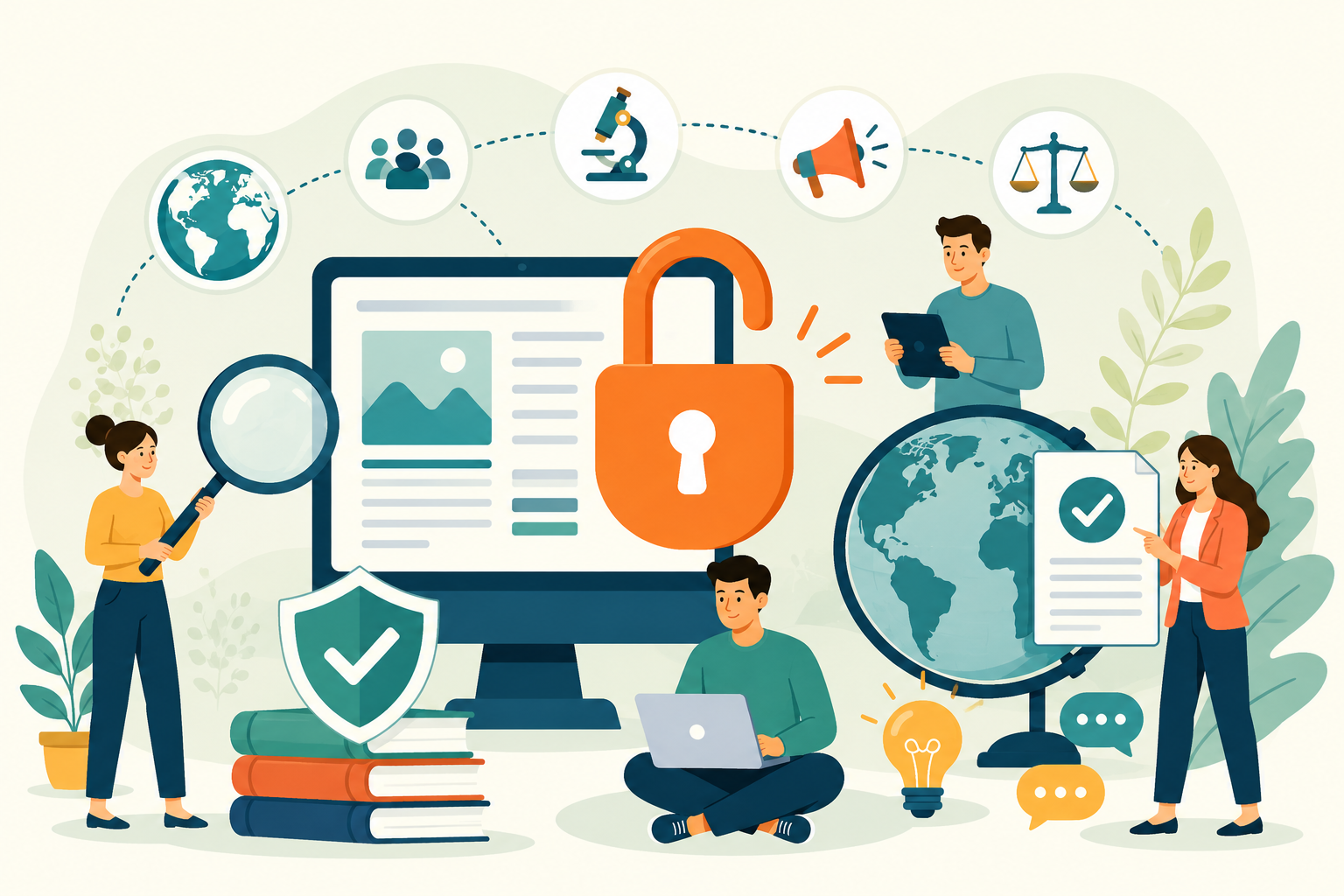
In a world where information travels faster than ever, misinformation can spread with just a few clicks. Academic research plays an important role in countering unreliable claims, but only if credible research is accessible to the people who need it. This is where Open Access (OA) publishing can make a difference. By removing or reducing paywalls, OA allows research findings to reach students, researchers, journalists, policymakers, educators, and the wider public.
Here are five ways Open Access publishing can help combat misinformation.
1. Making Reliable Research Accessible: When credible research is hidden behind expensive paywalls, many readers may turn to freely available—but unreliable—sources instead.
Open Access makes peer-reviewed research easier to find and read. By giving more people access to evidence-based information, it creates an alternative to unsupported claims circulating online.
2. Putting Evidence Within Reach: Misinformation often thrives when accurate information is difficult to access or understand.
OA publications make research available to a much wider audience, allowing readers to check claims against original studies rather than relying solely on social media posts, headlines, or second-hand interpretations.
For students and early-career researchers, this accessibility can also make it easier to publish your thesis and share research beyond the university library.
3. Supporting Fact-Checking and Journalism: Journalists and fact-checkers frequently need access to reliable academic sources when investigating controversial or misleading claims.
Openly available research allows them to examine studies, verify evidence, and provide readers with stronger sources. This can help bridge the gap between academic research and public understanding.
4. Encouraging Research Transparency: Open Access can contribute to a more transparent research ecosystem. When research papers, data, methods, and supporting materials are openly available where appropriate, other researchers can examine, evaluate, and build upon existing work.
Greater transparency makes it easier to identify weak claims, correct errors, and distinguish well-supported research from speculation.
5. Connecting Research with the Public: Academic research has little impact if it never reaches beyond academic circles. Open Access gives researchers an opportunity to communicate their findings to educators, policymakers, professionals, and ordinary readers. When credible information is available and presented clearly, people have a better chance of making informed decisions.
Open Access alone cannot eliminate misinformation. Research can still be misinterpreted, taken out of context, or deliberately distorted. However, making credible evidence freely available is an important step toward creating a more informed information environment.
The goal is simple: make trustworthy research easier to access, easier to verify, and harder to ignore.